Recent Posts
The hidden cost of reactive decision-making.
Oct 2026
Measuring AI success beyond cost savings.
Sep 2026
Why connected intelligence beats connected systems.
Aug 2026

Modern infrastructure is becoming increasingly complex. Ports, transport networks, utilities, logistics hubs, and critical national infrastructure all operate as interconnected systems where thousands of decisions, assets, and processes interact continuously. Yet despite advances in data and AI, many organisations still struggle with a familiar challenge: understanding how small changes propagate across the wider system.
Traditionally, attempts to model operational environments have relied on large, monolithic systems. These approaches aim to represent an entire operation within a single model, creating powerful but often rigid tools that are difficult to adapt as conditions change. In dynamic environments, where reality evolves by the minute, this can create a significant gap between what is modelled and what is actually happening.
A different approach is emerging.
At Entopy, we call them Micromodels.
Rather than attempting to simulate an entire operation through a single abstraction, Micromodels focus on specific operational behaviours. A Micromodel might represent vessel arrivals within a port, crane productivity on a terminal, traffic flow through a transport corridor, crew availability, weather impacts, or asset utilisation. Each model is deliberately narrow in scope, designed to understand one aspect of the system exceptionally well.
Individually, this may not sound revolutionary. The power emerges when these Micromodels are connected.
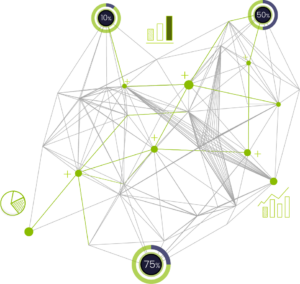
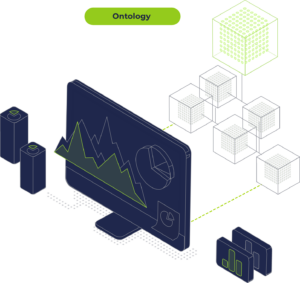
Through a shared operational Ontology, Micromodels become part of a larger intelligence network. Each model contributes its understanding of a localised process, while simultaneously informing and being informed by the wider operational picture. This enables organisations to move beyond isolated forecasts and towards a continuously evolving understanding of how the entire system is behaving.
The implications are significant.
Consider a delayed vessel arrival. In most environments, the delay is identified and reported. Operators are informed, plans are updated, and attention moves elsewhere. But the real question is not whether the vessel is delayed. It is what that delay means.
Will it compress pilotage schedules? Affect berth allocation? Create resource conflicts later in the day? Increase congestion elsewhere in the network?
No single model can answer those questions effectively. A network of Micromodels can.
By understanding how local changes propagate through interconnected systems, organisations gain visibility into second and third-order consequences before they materialise. Small deviations that once appeared insignificant can be recognised as early indicators of future disruption.
This approach also transforms how intelligence capabilities are deployed.
Instead of requiring years-long transformation programmes, organisations can start with a specific operational challenge and deploy a focused set of Micromodels where value is most immediate. As trust grows, additional models can be introduced, gradually expanding coverage across the operation. Intelligence compounds over time because every new Micromodel strengthens the understanding of the wider system.
The result is a fundamentally different way of optimising infrastructure.
Not through bigger models, more dashboards, or additional layers of reporting, but through connected intelligence built one layer at a time.
Because in complex infrastructure environments, the biggest opportunities often begin with the smallest signals. The challenge is having the intelligence to see how they connect.
